
Playbook and Plytix are often evaluated together by ecommerce and CPG teams looking for a DAM solution. While both platforms support product assets, they are built for different layers of your workflow.
Plytix is a PIM (Product Information Management) system designed to specifically structure product data across channels. Playbook is a modern DAM built for managing, searching, and collaborating on creative assets at scale, including product catalogs.
If your team is dealing with photoshoots, product launches, and marketing content, this distinction matters more than you might think.
Playbook vs. Plytix
A more flexible, asset-first alternative to manage your product catalog
| Playbook | Plytix | |
|---|---|---|
| Pricing and accessibility | ||
| Pricing transparency | Clear, public pricing. Scales with team size. | Tiered pricing based on catalog size and features. |
| Cost for teams | Flat pricing with unlimited members. | Pricing increases with product catalog complexity. |
| Onboarding | ||
| Ease of getting started | Self-serve. Start immediately. No sales calls required. | Requires setup of product schemas and attributes. |
| Implementation | Instant import from Google Drive, Dropbox, and more. Start same day. | Requires defining taxonomy, attributes, and product data models. |
| Feature set | ||
| Core product | Digital Asset Management (DAM) + creative workflow platform | Product Information Management (PIM) with DAM features |
| AI capabilities | AI-powered search, smart tagging, visual search, workflow automation | Limited AI focused on structured product data enrichment |
| Search experience | Natural language + visual search (e.g. “gold jewelry photos”) | Attribute-based filtering tied to product data |
| Asset management | Built for RAWs, PSDs, videos, and large photoshoot libraries | Assets attached to products; limited standalone workflows |
| Tagging and metadata | Flexible tags + custom fields + editable AI tags | Structured attributes tied to SKUs |
| External sharing | Shareable boards with revocable access + expiration controls | Primarily product catalog sharing |
| Collaboration | Built for creative teams (comments, workflows, boards) | Focused on product data collaboration |
| Handles product photos & content | Yes — built for managing and organizing large product photo libraries | Yes, but primarily as attachments to products |
| PIM capabilities | Not a full PIM, but supports flexible metadata and organization | Full PIM system for managing product data and attributes |
| Creative workflow support | End-to-end workflows: organize, review, share, and publish | Limited — focused on product data, not creative workflows |
Why CPG & Ecommerce Teams Choose Playbook Over Plytix
Most CPG teams already have Shopify / ERP / spreadsheets for product data and defined SKUs and attributes, but still struggle with:
- Finding the right product images
- Managing photoshoots across seasons and launches
- Sharing assets with retailers, agencies, and partners
Playbook solves the day-to-day operational pain that PIM tools don't.
See how Dyla Brands manages product photography and campaign assets across multiple retail partners →Plytix is designed around SKUs. Playbook is designed around how CPG teams actually work:
- Organizing thousands of product images from shoots
- Managing RAW → edited → final assets
- Grouping by campaigns, launches, or collections
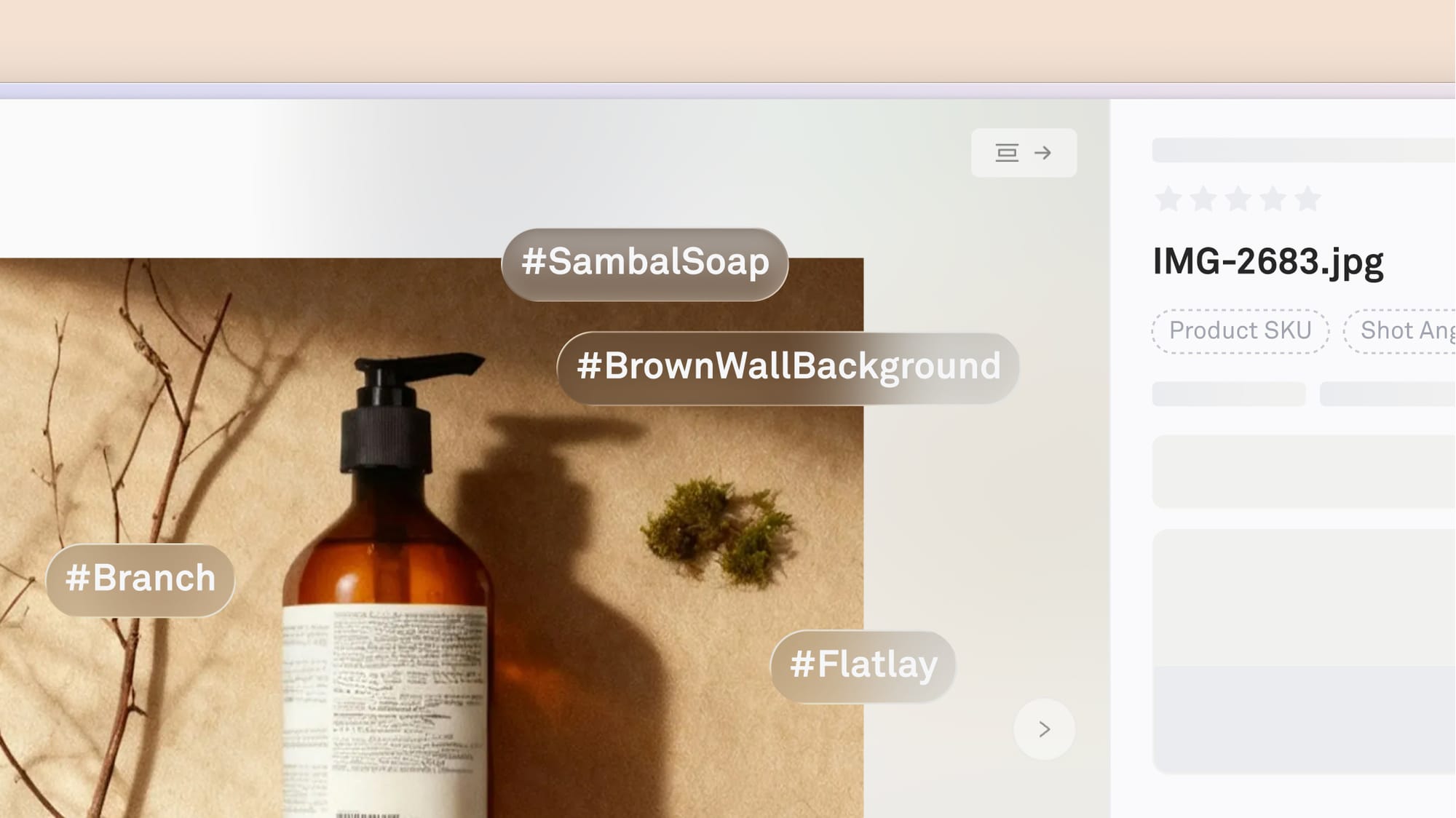
In a PIM, everything depends on structured attributes being filled in correctly. Sometimes metadata is messy, attributes have typos, or newly uploaded assets are missing tags. You don't have to rely on manual logging anymore — Playbook Intelligence lets your team:
- Search visually ("gold jewelry", "blue packaging")
- Use natural language ("latest spring campaign")
- Combine tags, filters, and AI
Product teams constantly share assets with retailers, agencies, distributors, and other external partners. Playbook makes this easy with:
- Share boards with customizable look and feel using built-in templates
- Brand portals for distributing approved assets to retailers and partners
- Revocable, time-bound access
- Expiration and password-protected controls
Plytix requires building product schemas, pre-defining attributes, and structuring your catalog before you can even get started. Playbook works instantly — just upload assets and start searching and organizing immediately. You can add more specific structure over time, or even let AI do it for you. Teams can import directly from Google Drive, Dropbox, and OneDrive and get started the same day.
The Bottom Line
Playbook and Plytix solve different problems but most CPG teams don’t actually need to choose one or the other. Plytix manages your product data to start, while Playbook manages the assets and workflows that bring those products to life.
Plytix is a strong choice if your primary need is managing product data across multiple ecommerce channels or syncing catalogs to marketplaces like Amazon or Shopify.
For teams dealing with photoshoots, campaigns, and high volumes of creative assets, Playbook is often the more immediately impactful solution. See how other teams use Playbook →
Frequently asked questions
What is the best Plytix alternative for CPG teams?
Playbook is a strong Plytix alternative for CPG teams managing product photography and brand assets. While Plytix is a PIM tool focused on product data, Playbook focuses on the visual asset side — storing, organizing, searching, and delivering product images, campaign assets, and brand files.
What is the difference between Plytix and Playbook?
Plytix is a Product Information Management (PIM) platform built for managing structured product data and syndication. Playbook is a Digital Asset Management (DAM) platform built for managing visual content — photos, videos, and brand files. CPG teams often need both, but Playbook is the right choice when the primary need is managing and delivering creative and visual assets.
Can CPG teams use Playbook to manage product photography?
Yes. Playbook is well suited for CPG teams managing large volumes of product photography. AI auto-tagging organizes images by product, color, and content automatically, and Smart search lets teams find any image instantly. Brand portals make it easy to distribute approved assets to retailers, agencies, and partners.
How much does Playbook cost?
The Team plan is $25/month per member and includes 5TB, AI features like Playbook Intelligence, conversational search, and AI tagging. See full pricing at playbook.com/pricing.