
The Challenge
As the Director of Technology & Business Intelligence at YMCA of Snohomish County, Michael Rinner has seen firsthand how telling the right stories can amplify a nonprofit’s impact. In an organization where 90% of staff work directly with children and families, keeping the focus on those real frontline stories is paramount.
Like many organizations, the YMCA of Snohomish County was drowning in media: too many photos and nowhere for them to go.
- Design Folder Chaos — Photos and videos from events were living in a chaotic patchwork of devices and drives. There was no single source of truth for the Y’s media assets, and certainly no easy way to find and reuse them for future content.
- Complex Photo Usage Permissions — Before Playbook, there was no reliable system for sharing photos at scale while staying aligned with the Y’s existing photo-permission tiers. This is a significant issue, given the YMCA’s strong emphasis on child safety and privacy.
- Frantic Revisions — Without a streamlined workflow, creating campaign assets for every event and program were time-consuming and could delay projects for weeks.
The Playbook Solution
Playbook was built for the modern era; clean, fast, intuitive, and flexible, instantly resonating with the YMCA’s team and mission. This balance fit the YMCA’s culture perfectly. Playbook gave the Y a single, central home for all their media and helped curate a long-lasting visual legacy.
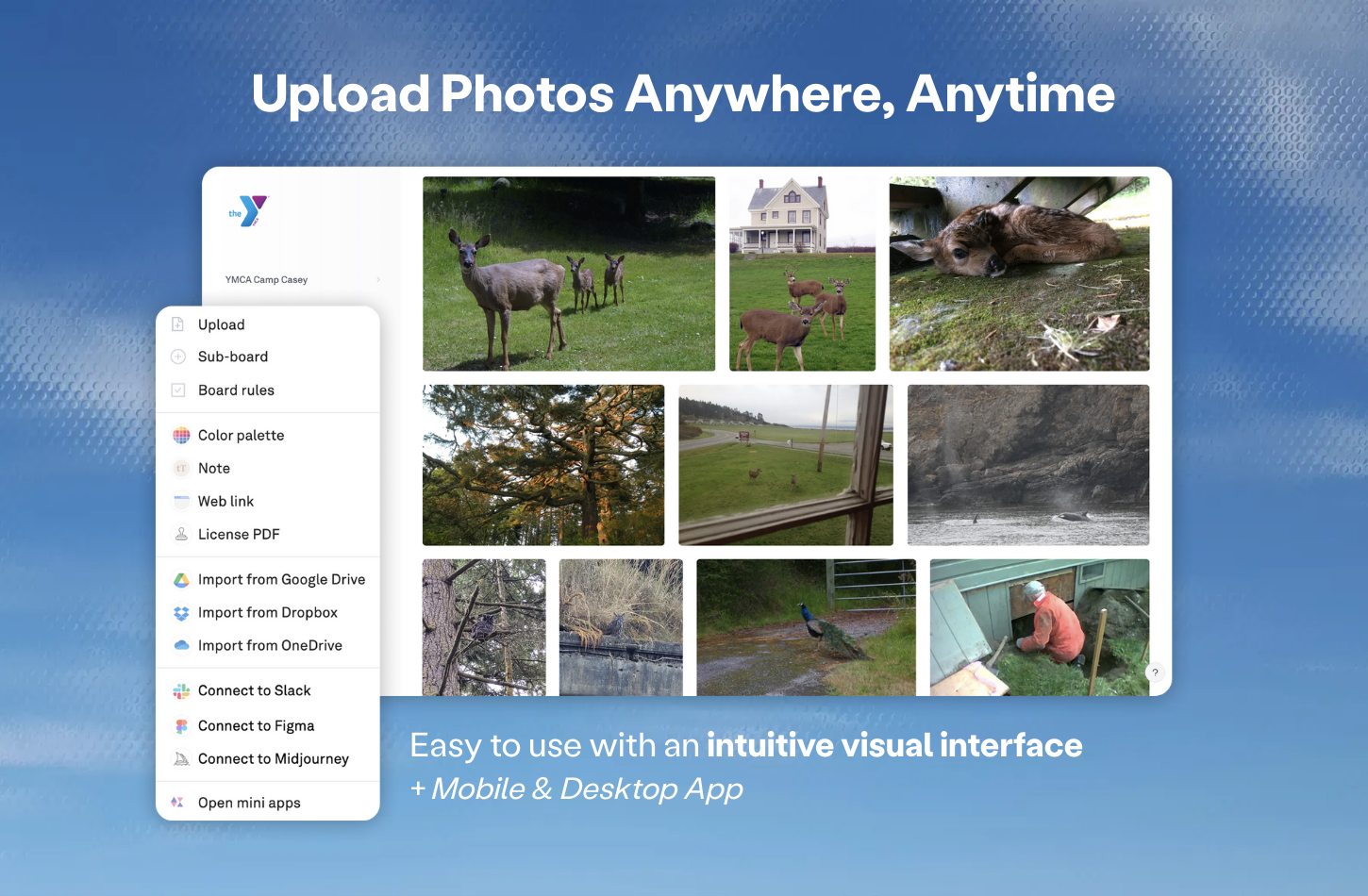
- Upload photos anywhere, anytime with an intuitive visual interface, easy file migration, speedy onboarding, and mobile + desktop apps.
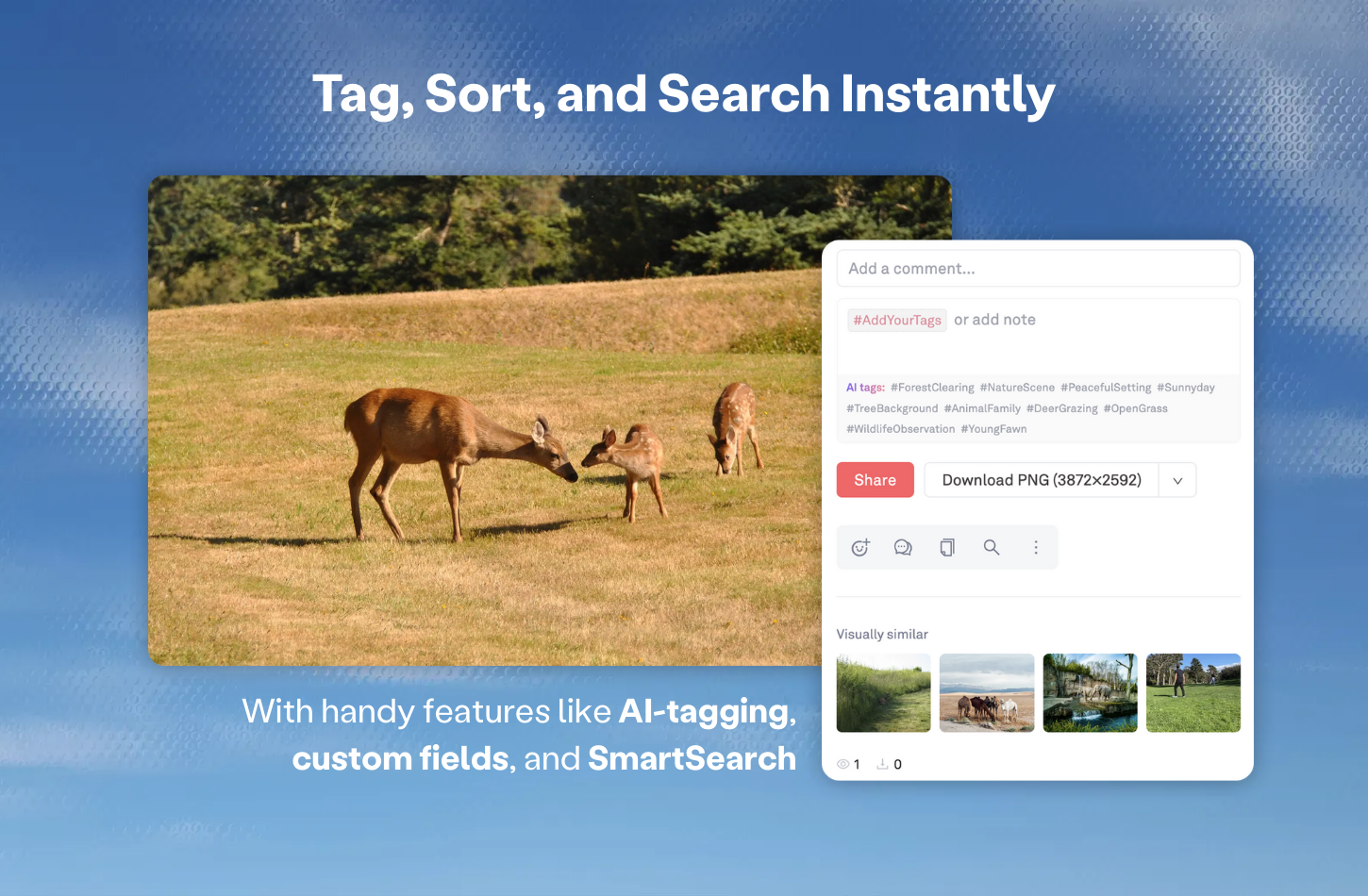
- Tag, sort, and search images instantly using auto-tagging, customizable sorting, and AI-powered smart search.
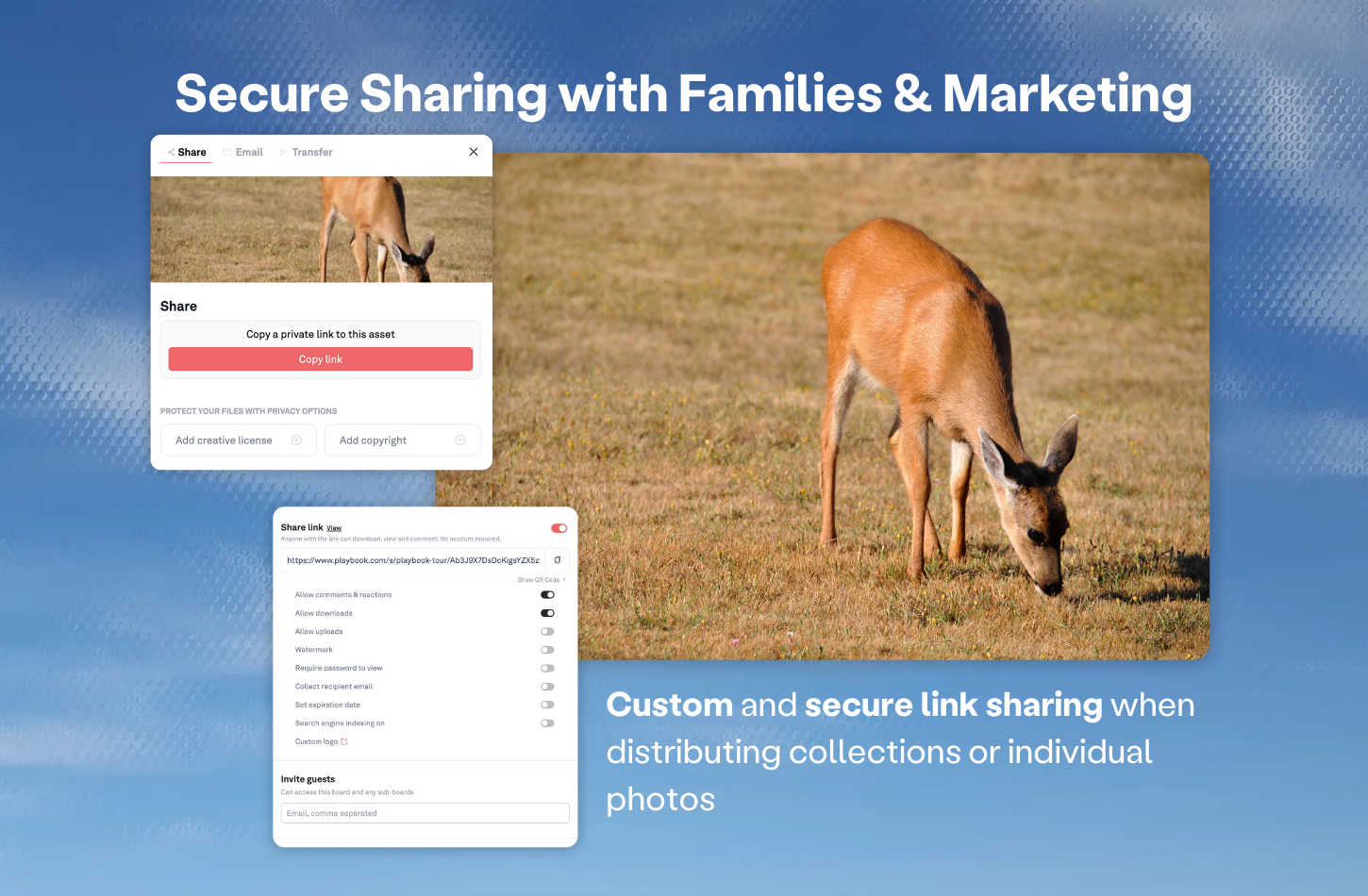
- Secure sharing with families and marketing with customizable secure link sharing, access controls, and other advanced security features when distributing photos.
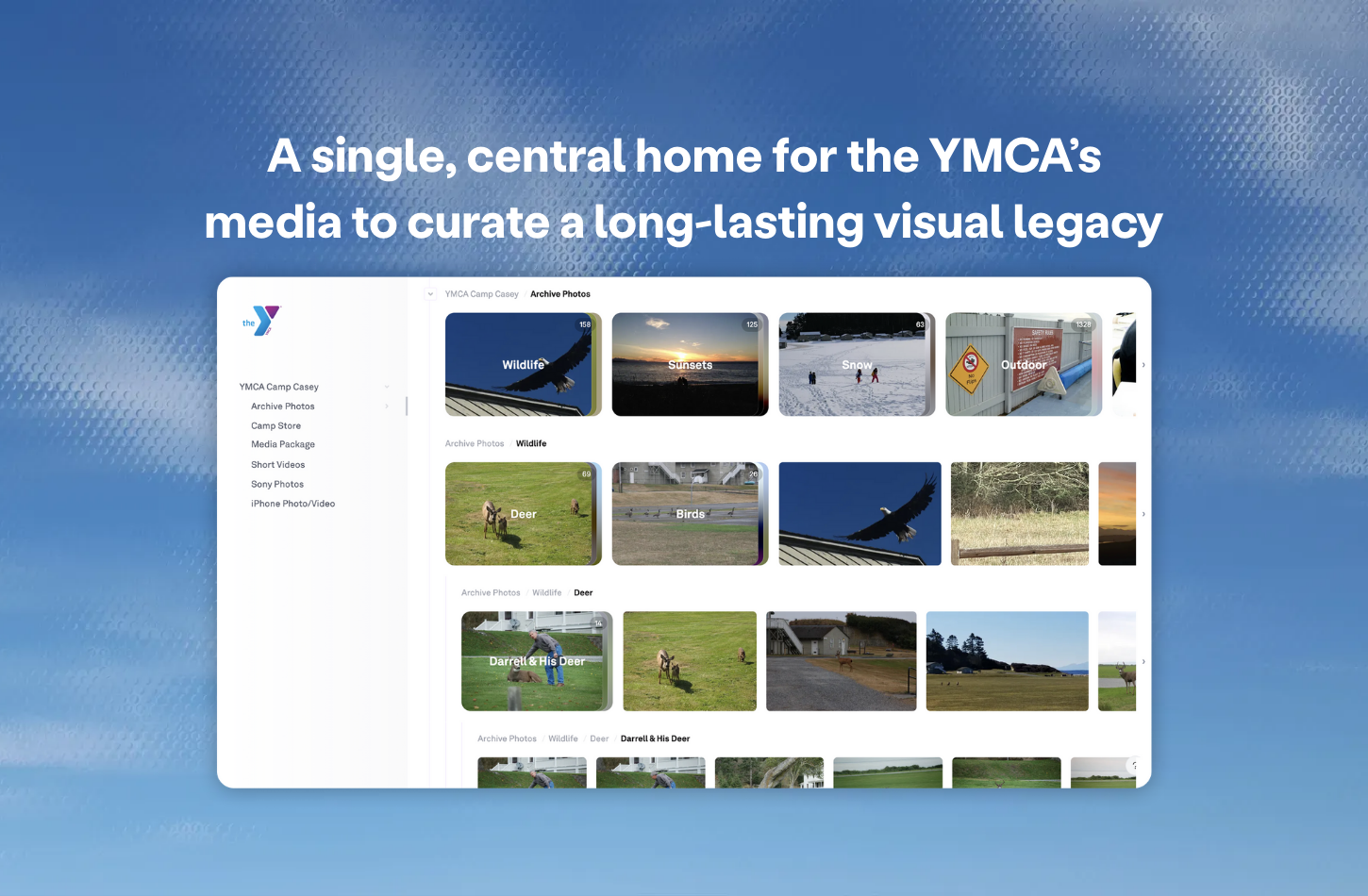
With Playbook, Michael and his team have achieved some impressive wins.
- Increased efficiency/productivity with 5–10 hours saved every week during the hectic summer camp season.
- Improved searchability of a rich existing media archive, leading the near-elimination of stock photo usage.
- Easy photo sharing for staff and volunteers with features such as upload links and Playbook’s mobile app.
- Strengthened alignment with media permissions for youth photos, making it easier to clearly separate what can be shared internally vs publicly.
Nonprofit Digital Asset Management: How the Y Centralized Their Media
The Y (YMCA) is a cause-driven nonprofit supporting youth development, healthy living, and social responsibility. They serve communities through six membership branches, dozens of childcare sites, various youth programs, and an affiliate partnership with Big Brothers Big Sisters of Snohomish County.
During the COVID shutdowns, a long-time YMCA member with a degenerative muscle condition lost her only outlet for exercise when the Y’s pool closed. When the facility finally reopened six months later, she was the first person to return to the water. “Life-saving” is how she described being able to return to the pool, a testament to the vital role the Y’s services play in the community. Stories like these fuel the Y’s marketing team to capture authentic moments and share them with the world.
Michael’s team supports the Y behind the scenes, and his belief in mission-first media directly influenced his search for the right tool to manage their growing collection of photos and videos. That search led him to Playbook.
Key Pain Points
(1) Design Folder Chaos — Michael recalls the pre-Playbook days when photos and videos from events were living in a chaotic patchwork of devices and drives. The team would snap amazing pictures during summer camps or youth programs and post a few to social media. However, there was no single source of truth for the Y’s media assets, and certainly no easy way to find and reuse them for future content.
“We had SD cards with pictures. We had an on-prem server that our teams could inconsistently access... We had SharePoint sites, but those tap out at 100 gigabytes. That wasn’t working. We had stuff spread across our graphic designer’s local storage, my laptop, our marketing team – in short, it really was just everywhere,”
More often than not, they’d default to generic stock images rather than spend hours digging around. The storytelling gap was real: despite thousands of photos on file, the YMCA’s true impact wasn’t always shining through in marketing materials, simply because the real photos were too hard to find.
(2) Complex Photo Usage Permissions — There was no reliable system in place to help manage the Y’s existing photo permission tiers at a large scale. Michael explains that parents can choose one of three media permission tiers for their kids:
- No photos at all.
- Photos OK, but only share them privately with our family.
- Full permission to use photos publicly.
Because child safety and privacy are top priorities at the YMCA, it was essential that these permissions be honored at every step. While camp staff carefully avoided taking photos of children with no-photo status, once images reached marketing teams, it became difficult to confirm which photos were cleared for public use. This created extra caution and slowed down content sharing, as no one wanted to risk using an image outside the family’s chosen permissions.
(3) Frantic Revisions — One flagship project in particular exposed just how unsustainable the previous workflow had become. Each year, the Y produces a large camp brochure featuring smiling campers and triumphant outdoor adventure shots.
“The old process would be: we’d design a big camp brochure, a huge spread, and we would use pictures. Then we’d have a couple rounds of reviews where our camp directors would have to say, ‘Oh, actually, we don’t have that kid’s permission’,”
Without a clear system, creating this brochure was “hugely inefficient” and a time-consuming scramble that could delay projects for weeks. Multiply that headache across every event and program, and it’s easy to see why Michael and his colleagues were desperate for a better way.
The root of the problem was clear: the YMCA had too many photos and nowhere to put them – no centralized, accessible hub to organize their media or to enforce those important usage permissions. Something had to change, and fast.
Playbook’s Media Management Solution
Faced with mounting media chaos, Michael went looking for a solution that could tame the mess and give his team some peace of mind. As a tech-savvy leader, he evaluated all the usual suspects in digital asset management (DAM). None quite fit the bill.
That’s when Playbook caught his eye. From the first trial run, it was clear this wasn’t like the clunky, overly-complex platforms they’d seen before.
“We tried all the big products and felt like Playbook was absolutely the best value and the most modern user experience for our team. It didn’t take very long after signing up and uploading a couple of photos to know, OK, this feels like a 2024, 2025 product,”
From that point on, whenever staff at an event snapped new pictures, they knew exactly what to do: add them to Playbook. Even staff and volunteers without Playbook accounts could contribute thanks to a handy feature: upload links. That was a game changer.
“Prior to that, we’d get some staff emailing photos, some sharing a OneDrive link, some sending files via Microsoft Teams… It was all over the place. Playbook’s upload links have really streamlined a pain point for us,”
Now, no more hunting through emails or chat threads for stray files, everything can be collected into one accessible hub.
Upload Photos Anywhere, Anytime
Nowhere did Playbook’s impact shine more brightly than with the YMCA’s summer camp media workflow. Available on both desktop and mobile devices, Playbook empowered the frontline camp staff to play an active role in the Y’s storytelling process. Instead of dumping a memory card on someone’s desk and hoping the right photos get used, the counselors could upload and organize photos in real time.
“The thing I hear most from our staff is about how Playbook has really solved camp pictures for us.”
By putting a user-friendly tool directly in the hands of the people closest to the action, the YMCA removed bottlenecks and ensured greater accuracy. The marketing team no longer has to play detective to figure out a photo’s backstory. The people who took the photo have already handled that, thanks to Playbook.
Tag, Sort, and Search Images Instantly
With Playbook in place, the YMCA’s media operations have transformed from a scramble to a smooth engine. Workspace members can utilize Playbook’s GPT powdered Smart-Search capabilities to quickly locate relevant media. Michael estimates his team now saves “easily 5 to 10 hours a week” that would have otherwise been spent wrangling photos and chasing permissions. These hours saved was time staff could now devote to higher-value tasks like engaging with the community or creating new content. Projects that used to require hours of tedious back-and-forth have been eliminated simply because everyone knows exactly where to find the assets they need and which images are approved to use.
Other features —like auto-tagging, sorting, and customizable fields— have significantly cut down on stock photo usage. Staff can now quickly locate, resize, and repurpose graphics or photos without having to dig through network drives. In the past, when the team couldn’t quickly locate a suitable YMCA photo, they’d begrudgingly turn to stock photography to fill in the gaps. An organized library of real YMCA moments means there’s almost always an authentic image available for any given need. In fact, he’s noticed a qualitative difference in their outreach:
“The data shows that when we use pictures of people from our community and families from our community and spaces in our community, they perform much better,”
Secure Sharing with Families and Marketing Teams
For each week-long camp session, the camp staff creates two boards in Playbook.
- Private, password-protected board for camp families — Camp Leadership upload all the photos that are approved for sharing with parents. At the end of the week, families receive the link and password to the board, allowing them to browse and download wonderful, candid snapshots of their kids canoeing, climbing, and crafting - all those camp memories that parents cherish.
Because Camp Leadership uploads photos to Playbook throughout the week, by Friday, not only are parents’ photos ready, but marketing’s photos are also ready. The counselors simply tag or copy any images that have full public permission into a second board designated for the marketing team.
- Marketing-approved board — The YMCA’s marketers can instantly see the curated subset of photos that they know are cleared for public use. There’s no ambiguity: if it’s on the marketing board, it’s fair game for Facebook posts, brochures, flyers, and so on. Playbook has essentially built permission compliance into the workflow.
Day-to-day workflow across departments has improved thanks to Playbook’s intuitive solutions. What was once a major hurdle has now become an engine for productivity and creativity.
Now, other staff can self-serve by hopping into Playbook (via a share link or view access) and grabbing what they need. Branch leaders receive curated collections of photos to use in their local newsletters and social media, empowering them to engage their communities with relevant content.
Building a Visual Legacy
For Michael Rinner, adopting Playbook was about more than just tech for tech’s sake. It was a strategic move to strengthen the bridge between media and mission. A well-organized media library can have a significant impact on a nonprofit’s ability to tell its story and rally support.
In other words, investing effort in organizing and managing media isn’t a distraction from the mission; it’s an enabler of the mission.
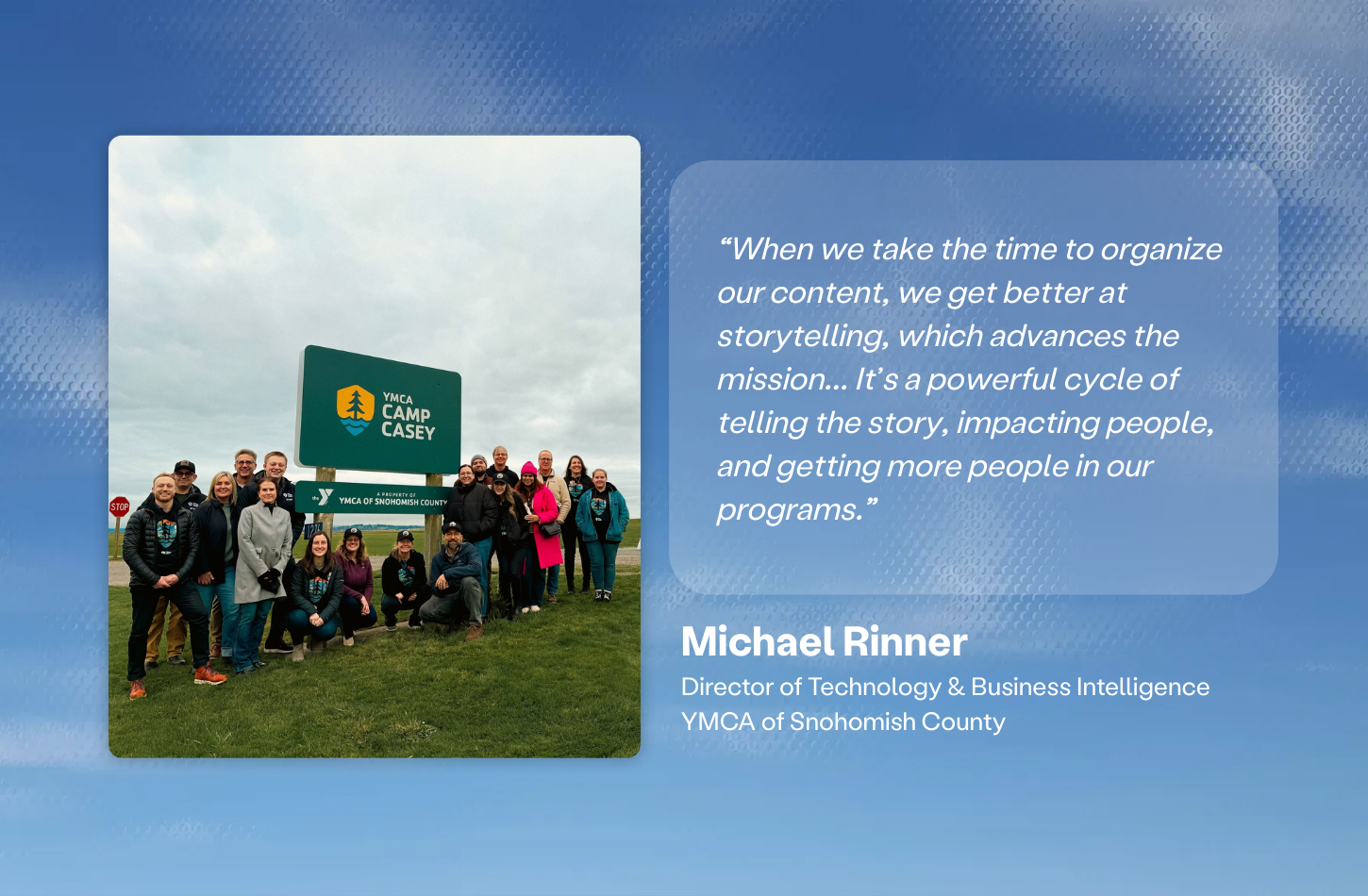
“When we take the time to organize our content, we get better at storytelling, which advances the mission... It’s a powerful cycle of telling the story, impacting people, and getting more people in our programs.”
Michael’s experience has also shifted his perspective on technology leadership. He advocates for tools that democratize content creation and sharing, rather than ones that only silo control within the IT or marketing departments. In fact, his advice to other nonprofit leaders is straightforward: empower the frontline.
The people who are actually running summer camps, teaching swim lessons, or organizing community events are witnessing the magic moments first-hand. By providing those people with an easy way to upload and share media (rather than expecting them to hand everything over to a specialist), you ensure that the best stories are collected at the source. This philosophy is exactly what Playbook’s user-friendly design enabled at the YMCA; it shifted power outward to the edges of the organization, where the mission is actually carried out every day.
Engagement is higher when the visuals are consistently aligned with the brand. By investing a little time upfront to organize and tag their media, Playbook has helped the Y make finding those visuals effortless. Michael can scroll through the Y’s recent social media posts and see the shift – fewer generic placeholders, more real faces. It’s not just a cosmetic improvement; it’s helping the YMCA tell a more genuine story, which in turn resonates more strongly with their audience.
The mission shines through every image. As Michael observed, those genuine moments of achievement, belonging, and friendship are finally front and center, inspiring the community and showcasing the YMCA’s impact. Media has become “an engine instead of a hurdle” for the organization’s various teams, propelling their marketing and communications to new heights.
It’s worth noting that the YMCA’s use of Playbook continues to evolve in inspiring ways. In 2025, the organization ran its first full season of Camp Casey, a historic YMCA camp facility with military roots that has been given new life serving the community. Michael’s team used Playbook to document the site’s transformation, capturing before-and-after photos, ongoing renovations, and the smiles of campers experiencing Camp Casey’s “new chapter” for the first time.
What Michael and the YMCA have built is a robust, people-powered content engine that balances both operational efficiency and the heart of their mission. By solving the concrete problems of media chaos and permission tracking, they unlocked new potential to celebrate their community’s stories.
These images aren’t just useful for immediate marketing; they are being saved as part of the YMCA’s visual history. Playbook isn’t just solving today’s problems – it’s helping build a living archive for the future.
“Playbook is, without a doubt, a long-term archival and storytelling platform.”
By transforming what was once a jumble of files into an organized treasure trove, the YMCA is actively building a visual legacy for the next generation.
The YMCA’s journey is a compelling example of what’s possible when the right tool meets a passionate team. Discover how Playbook can empower your organization to capture and share powerful stories that need to be told.
Ready to build your own visual legacy?